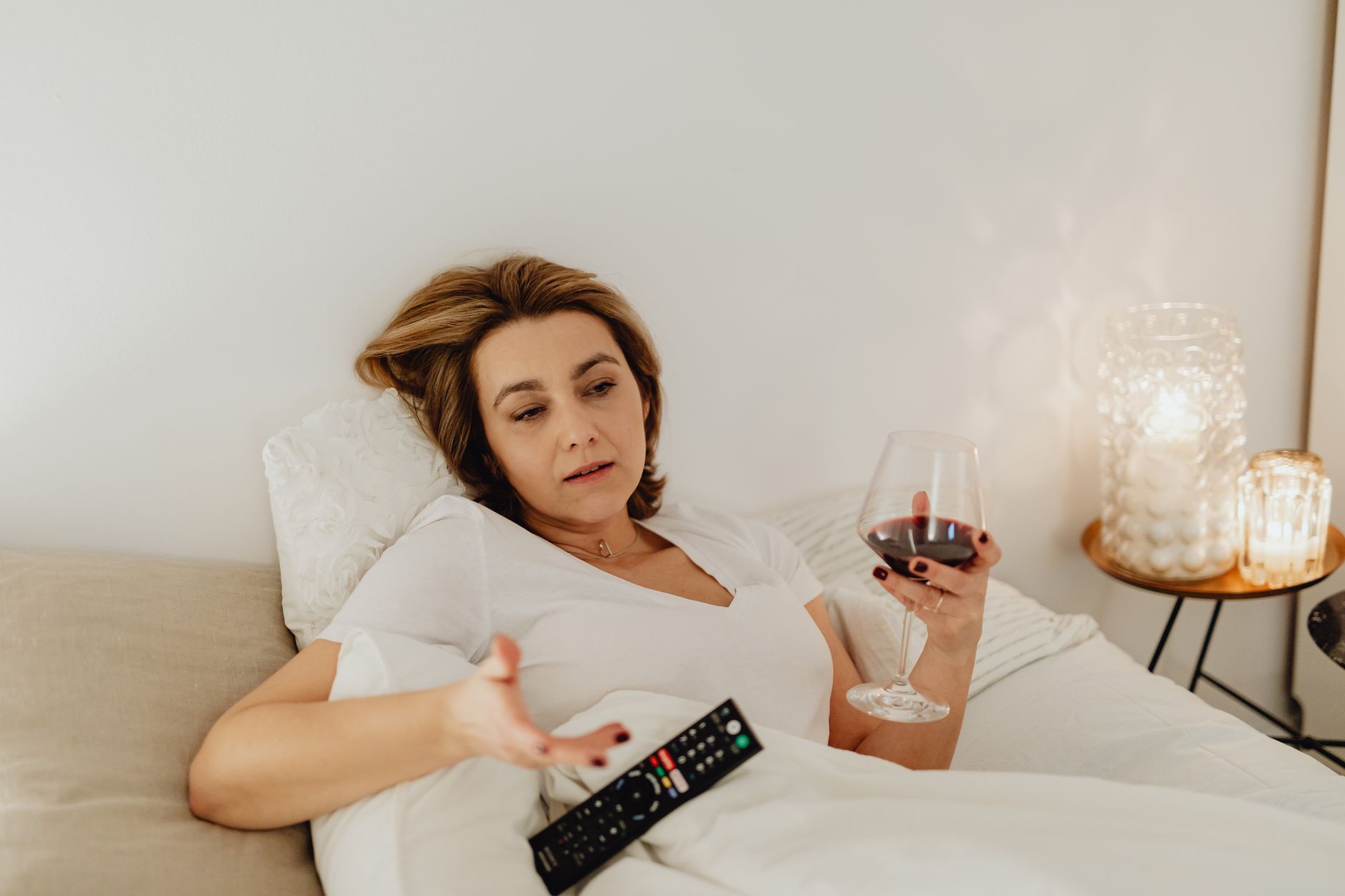
A glass of wine at 9 p.m. often does help you fall asleep. That’s the problem. It works well enough on the first part of the night that you never connect it to how you feel at 10 the next morning.
Alcohol is a sedative. It shortens the time it takes to drift off, which is why the nightcap habit feels like it’s working. But sedation and sleep aren’t the same thing. As your body metabolizes alcohol, sleep in the second half of the night tends to get lighter and more broken up. Research on alcohol and sleep also consistently finds that REM sleep is suppressed, especially early in the night. REM is the stage most tied to emotional processing and memory, so losing some of it is part of why a night after drinking can leave you irritable even when you were in bed for eight hours.
The 3 a.m. wake-up has a cause
If you drink in the evening and wake up in the small hours with a dry mouth and a busy head, that isn’t random. Your body has cleared enough of the alcohol that the sedative effect is wearing off, and what’s left is a nervous system that’s a bit wound up. Falling back asleep from that state is harder than falling asleep in the first place.

Dose matters, and so does timing. Two drinks finishing at 7 p.m. is a different situation from two drinks finishing at 11. I’d also say that body size, food in your stomach, and how often you drink all change the picture, so there’s no universal safe cutoff I can hand you.
Training makes it more noticeable
If you lift or run, you’ve probably noticed that a session the day after drinking feels strangely heavy even though nothing was sore. Plenty of people who wear sleep trackers report higher resting heart rate and lower heart rate variability on nights they drank. That’s anecdotal, and the devices aren’t perfect, but it matches what you’d expect from fragmented sleep.
The practical move is boring: if you’re going to drink, finish earlier and have water and food alongside it. Better still, run your own test. Take two weeks of no alcohol on weeknights and see whether your Monday and Wednesday sessions feel different. Some people notice a lot. Some notice little, and that’s useful information too.
I don’t think the answer is never drinking. I do think we should stop calling it a way to wind down for sleep, because what it does is closer to borrowing sleep from later in the night, and the interest isn’t small.