
Most gym programs are quietly lopsided. Push movements - bench press, overhead press, dips - get scheduled, loaded, and tracked with care. Pulling movements, especially horizontal ones, get tacked on at the end or skipped when time runs short. The result is a common pattern: well-developed chest and anterior deltoids sitting over shoulders that roll forward and a mid-back that can’t hold a position under load.
Horizontal pulling means rows - cable rows, dumbbell rows, barbell rows, chest-supported rows. The defining characteristic is that the resistance travels toward you roughly parallel to the floor, loading the mid-back musculature: rhomboids, mid-trapezius, rear deltoids, and the lower portion of the lats. These aren’t the showpiece muscles. They also happen to be the ones that hold the shoulder blade in place every time you press anything heavy.
Why the Ratio Actually Matters
A common recommendation among strength coaches is a 2:1 pull-to-push ratio - meaning two sets of rowing or pulling for every set of pressing. That’s not a universal prescription, but it reflects a real asymmetry in how most people train. Pressing is loaded more aggressively and recovered from faster (in terms of motivation, not physiology). Rows tend to get lighter loads, less attention to form, and less progression over time.
The practical consequence is that the muscles responsible for scapular retraction and posterior shoulder stability fall behind. Overhead pressing with a weak or poorly coordinated mid-back doesn’t just limit your press - it’s a reliable way to accumulate shoulder irritation over months.
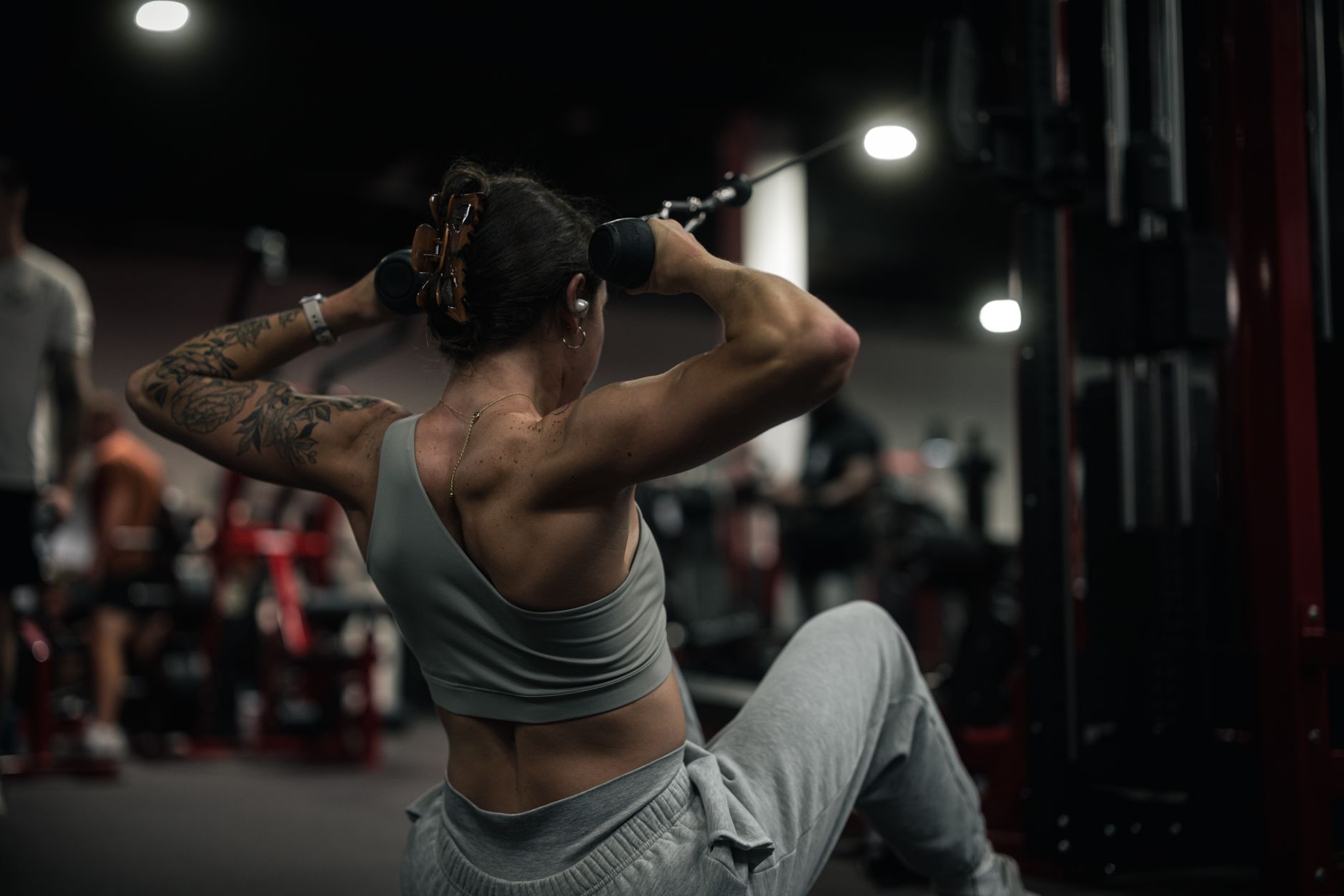
What Good Horizontal Rowing Actually Feels Like
The chest-supported dumbbell row is an underused diagnostic tool. Lying prone on an incline bench removes momentum entirely and makes it impossible to heave the weight with your lower back. If you can’t feel a strong contraction between your shoulder blades with this variation, your heavier cable rows are probably being completed with your arms and biceps, not your mid-back.
The cue that tends to work: think about driving your elbow toward your hip pocket, not pulling the weight toward your chest. The shoulder blade should move first.
A Simple Fix
Add one dedicated horizontal row as the first pulling movement of your week - not as an accessory after pressing, but as a primary lift with real loading and progression. Treat it like you’d treat the bench press.
Whether that’s enough to close the imbalance depends on how far behind the pulling work already is - and for most people, it’s further behind than it looks.