Most lifters develop strong opinions about which exercises hit which muscles. They picked up the logic somewhere - a YouTube channel, a training partner, a magazine from 2011 - and it stuck. The cable fly targets the inner chest. The leg extension isolates the quad. The skull crusher is the best tricep movement. These statements aren’t wrong, exactly. They’re just incomplete in a way that quietly undermines years of training.
The muscle you feel during an exercise is not necessarily the muscle doing the most mechanical work. Sensation and load are not the same variable. The pump you feel in your biceps during a row is real, but the biceps isn’t the primary driver of that movement - it’s picking up slack because your elbow flexors were already engaged. What you perceive as targeting is often just what happens to be near the tension, or what your nervous system has learned to notice first.
This matters most with compound movements. Squats, deadlifts, pressing - these involve multiple muscles sharing load in ways that shift depending on stance, bar position, fatigue level, and individual anatomy. Someone with longer femurs will load their posterior chain differently than someone built for the movement. Telling both of them that squats are a quad exercise and expecting the same result is wishful thinking.
The Sensation Problem
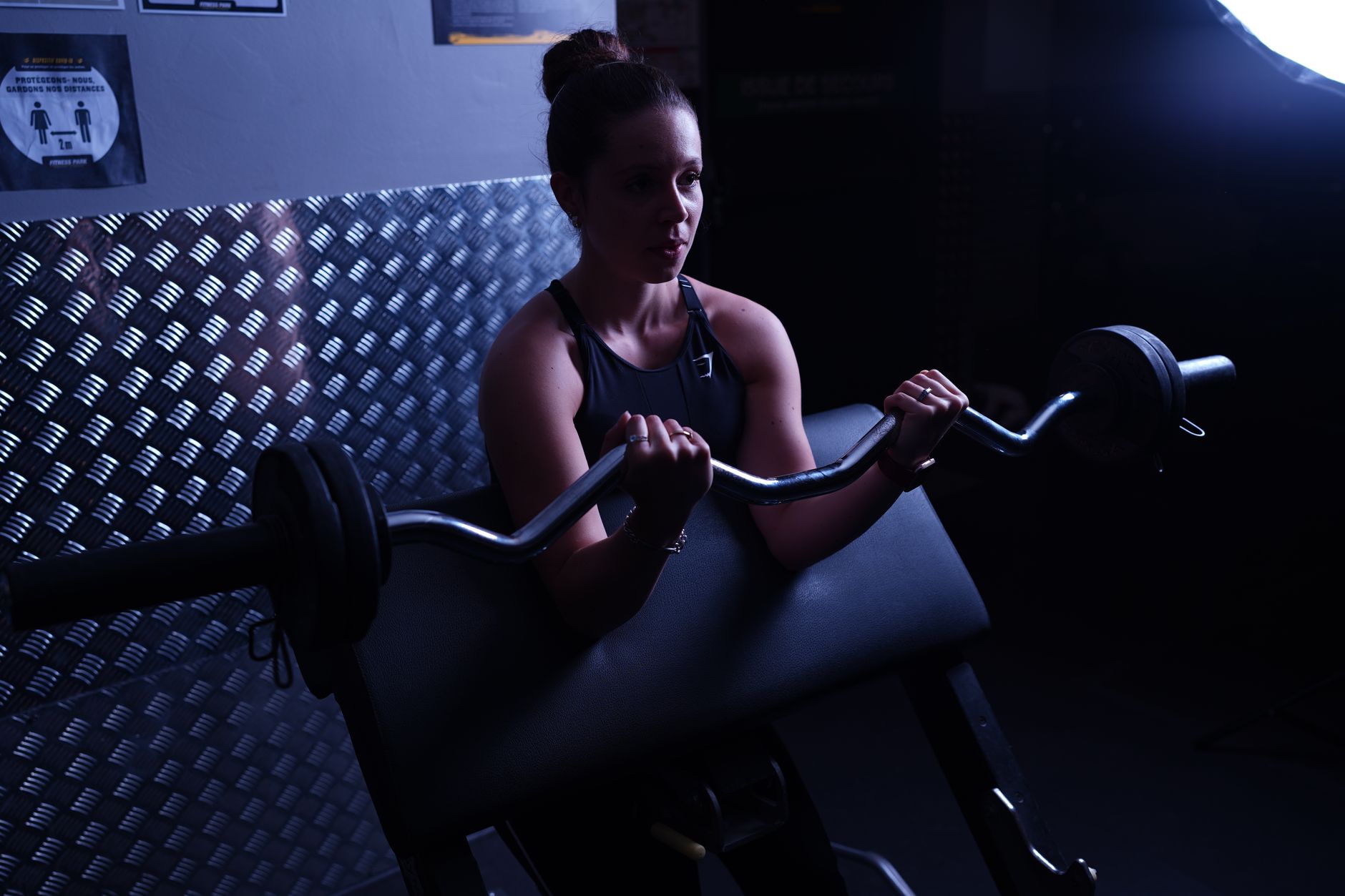
The mind-muscle connection is real but overrated as a training guide. Research supports the idea that consciously focusing on a target muscle can increase its activation - but only up to a point, and mainly at lower loads. Under heavy effort, your body recruits whatever it needs to move the weight. The sensation you’re chasing, that burning isolation feeling, often signals accumulated fatigue rather than optimal loading.
This is worth sitting with. A lot of accessory work is selected precisely because it feels effective. It burns. It pumps. It creates the subjective sense that something productive is happening. But hypertrophy doesn’t care how the set felt - it responds to mechanical tension sustained over sufficient volume, applied to a muscle that is actually being lengthened and shortened under load.
What to Do Instead
Learn the biomechanics of the movements you’re already doing. Not to obsess over them, but to understand where the load actually travels. If you’re doing Romanian deadlifts to train your hamstrings, do you know what hip position keeps tension on the hamstring rather than transferring it to the lower back? If not, the exercise is doing something - just not necessarily what you think.
The trainee who chooses exercises based on feel will always be one step behind the one who understands what the movement is actually asking of the body. Sensation is data, but it’s not the most reliable data you have access to.