
Most people who aren’t seeing results aren’t training too much - they’re training just enough to feel like they did something, then stopping. Two days a week of moderate effort, a walk on the weekends, maybe a yoga class. Comfortable. Consistent. And mostly ineffective for changing body composition or building meaningful strength.
The concept of a “minimum effective dose” in training comes from a legitimate place. You don’t need to train six days a week to make progress. Frequency and volume have diminishing returns. All of that is true. But the minimum dose that actually produces adaptation is higher than most recreational gym-goers are hitting.
What Adaptation Actually Requires
Skeletal muscle responds to mechanical tension and metabolic stress. To grow or get meaningfully stronger, it needs to be challenged beyond what it’s already accustomed to - and that threshold moves as you adapt. This is progressive overload, and it’s not optional. Without it, consistent training is essentially maintenance at whatever level you’re already at.
For most untrained or lightly trained people, research on resistance training suggests that two to three sessions per week, hitting each major muscle group with adequate volume and proximity to failure, is enough to drive hypertrophy and strength gains. But “adequate volume” typically means somewhere in the range of 10–20 working sets per muscle group per week, performed with genuine effort. Not 3x10 at a weight you could do for 20.
The Comfort Problem
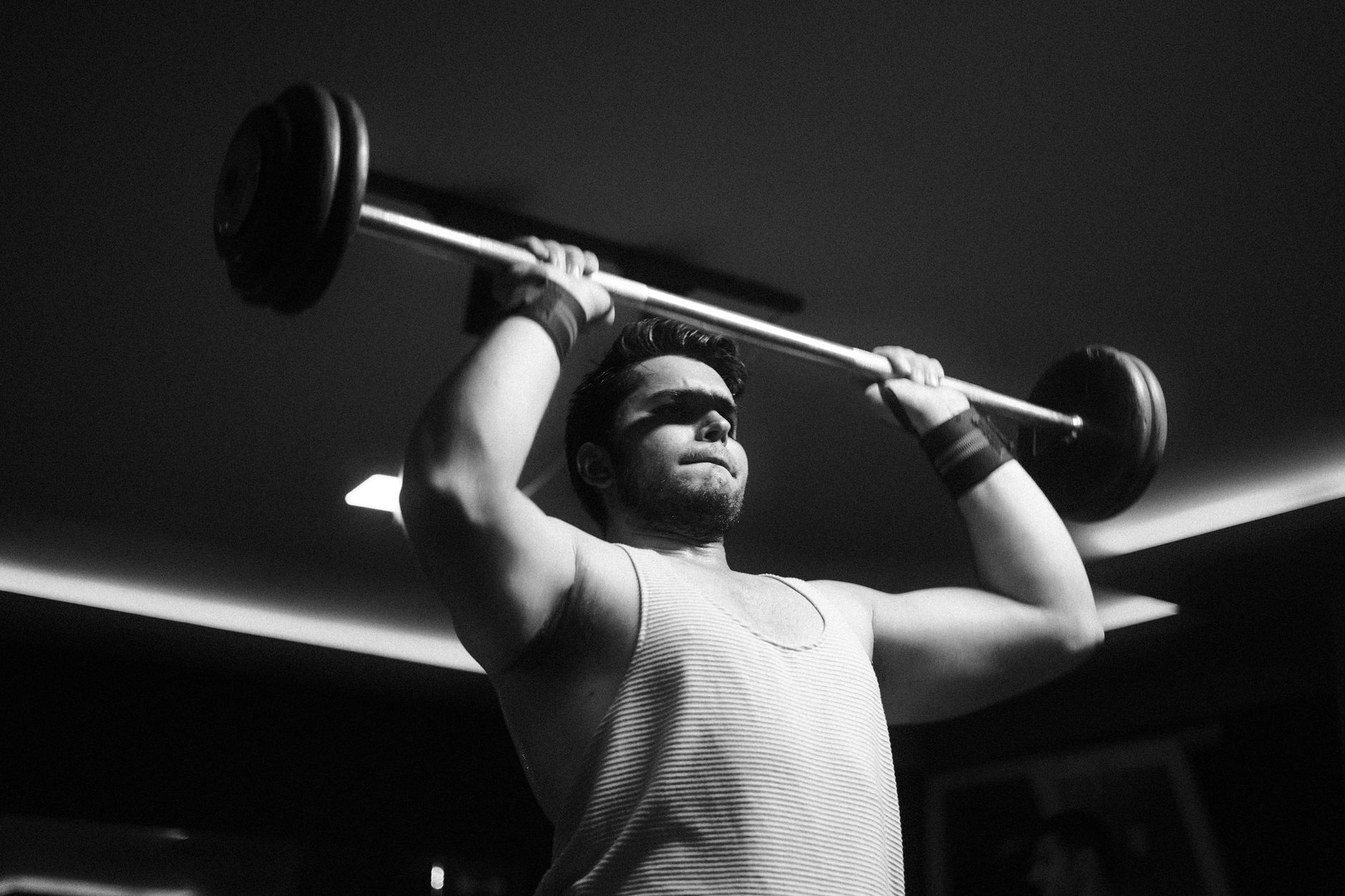
The real issue isn’t programming - it’s intensity regulation. People are surprisingly bad at gauging how hard they’re actually working. Stopping two reps before failure feels like working hard. It isn’t, not reliably. Leaving that much in the tank on every set, every session, accumulates into a significant effort deficit over weeks and months.
This is especially true for compound lifts, where discomfort arrives early and the temptation to rack the bar is strong long before the muscle has been adequately taxed.
The Practical Adjustment
It doesn’t require more days in the gym. It requires being honest about the last two reps of every set - whether they actually happened, and whether they were hard. That alone closes most of the gap.
What’s harder to answer is why effort feels so much more subjective than it should. Most people believe they’re working harder than they are, and that belief is difficult to dislodge without external feedback - a coach, a training partner, or at minimum a log that forces you to account for the numbers over time.