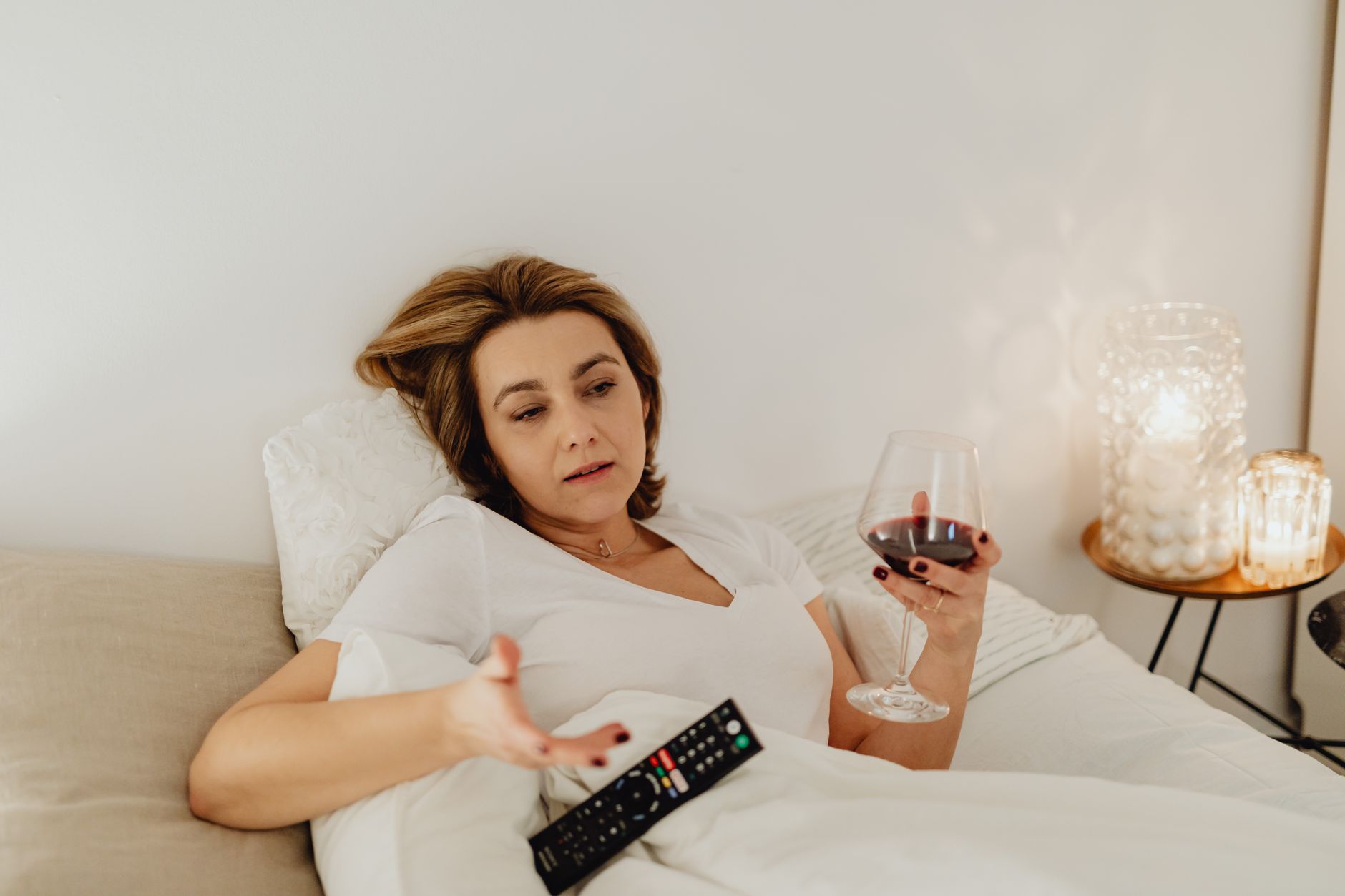
Alcohol makes you fall asleep faster. That part is true, and it’s exactly why the habit sticks. You feel drowsy, you drop off, and the evidence seems to confirm that the drink works.
The problem is that sedation and sleep are not the same thing. Alcohol is a central nervous system depressant, and what it produces is closer to being knocked out than to the layered, cycling sleep your body actually uses to recover.
What happens after the first few hours
Research on alcohol and sleep has consistently found that it suppresses REM sleep early in the night. As your body metabolizes the alcohol, the effect wears off and sleep tends to become lighter and more fragmented. That’s the window where people find themselves wide awake at 3 or 4 a.m., heart a little too fast, mouth dry, unable to settle.
You don’t connect it to the drink because the drink was hours ago. You blame stress, or the mattress, or age.
Alcohol also relaxes the muscles of the upper airway, which can make snoring and breathing interruptions worse. If you wake up unrefreshed after a couple of drinks despite eight hours in bed, this is one plausible reason.
Why training makes this more expensive
If you lift or run regularly, you’re counting on sleep to do real work: tissue repair, hormone regulation, consolidating the motor patterns you practiced that day. I can’t give you a number for how much a single glass of wine costs your next session, and anyone who claims to is guessing. But a lighter, broken night followed by a flat morning workout is a pattern many people notice once they start paying attention.

Timing matters more than most people assume
A drink with dinner at 6 p.m. is a different situation from one at 10:30 p.m. with the television on. The longer the gap between your last drink and bedtime, the more of the alcohol your body has cleared before sleep begins. Moving the drink earlier is a smaller ask than giving it up, and it’s a change most people can actually keep.
A simple test
Take two weeks of evenings without alcohol and see how the 3 a.m. wake-ups behave. If they disappear, you have your answer without needing a wearable to tell you.
I’d rather you run that test than take my word for it, because the pattern is hard to see from inside it, and for some people the nightcap has been part of the routine for so long that they’ve never slept without it.