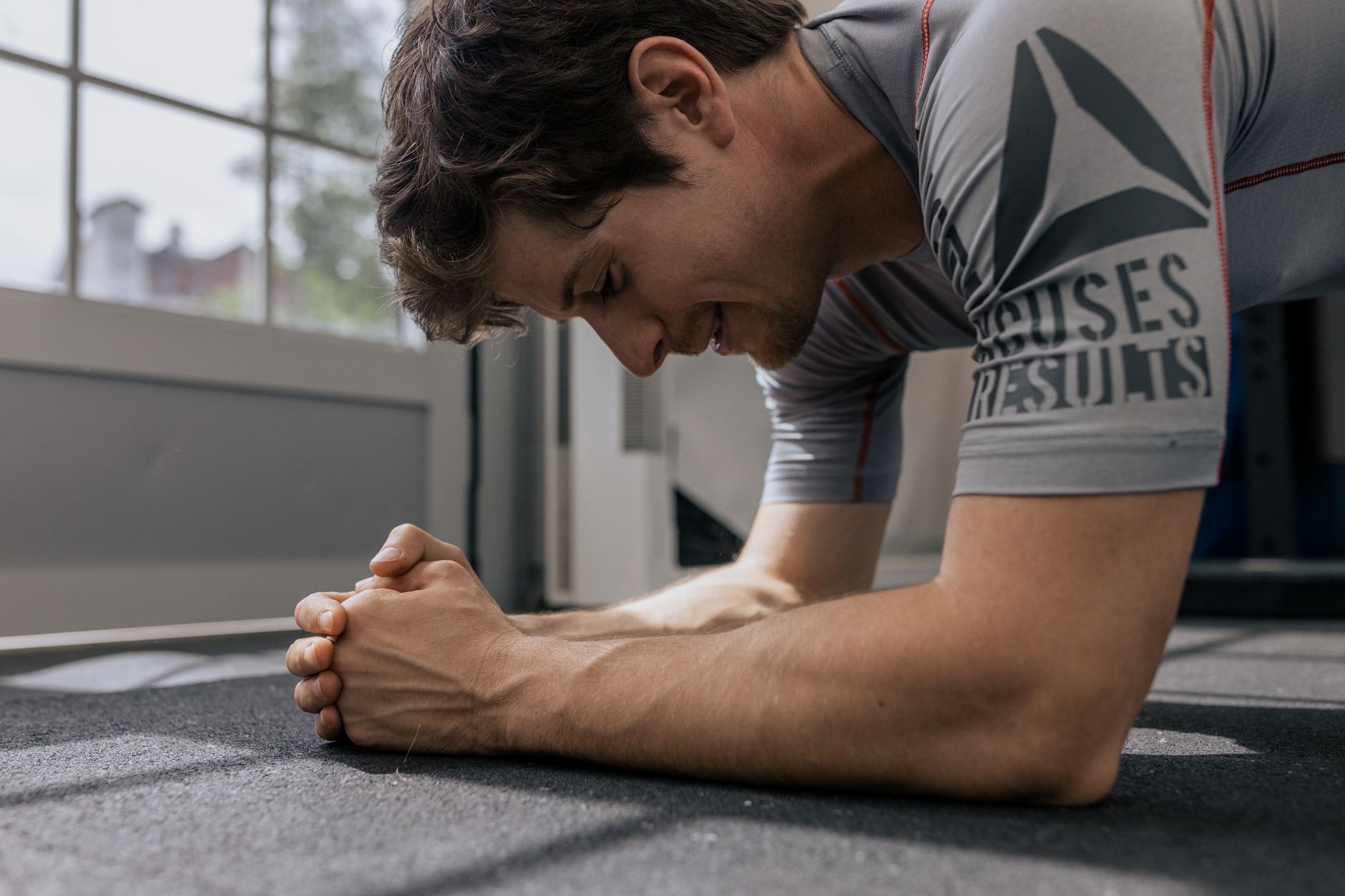
Most lifters treat the pause at the bottom of a squat or the hold at the top of a row as a mistake - a stall, a wobble, something to push through. The idea that you’d deliberately stop mid-rep and hold a position under load reads as inefficient to anyone chasing reps and sets. That instinct is wrong.
Isometric contractions - where the muscle generates force without changing length - are a distinct training stimulus, not a subset of regular lifting. Holding a Romanian deadlift at mid-shin for three seconds, or freezing a chin-up at chin-over-bar for a count of five, creates muscular tension in a way that moving reps simply don’t replicate. The muscle has nowhere to escape to. There’s no momentum, no stretch reflex, no cheating the sticking point.
Where They Actually Matter
The sticking point in most compound lifts is positional. You fail a bench press a few inches off the chest, not at lockout. You miss a squat out of the hole, not halfway up. These failure zones exist largely because the muscles are at a mechanical disadvantage at those angles and haven’t been trained to produce sustained force there - only to pass through quickly.
Adding a two-to-five second hold at or just below the sticking point forces adaptation exactly where it’s needed. This is position-specific strength, and it transfers. Powerlifters have used pin squats and paused bench press for decades because the logic holds: slow down the hardest part, get stronger there.

For hypertrophy, time under tension at long muscle lengths has drawn more attention in recent research. A three-second hold at the stretched position - the bottom of a cable fly, the bottom of a Nordic curl - keeps the muscle loaded longer at the point where passive tension is highest. That’s a meaningful stimulus, particularly for muscle growth in the end range.
How to Actually Add Them
Don’t build an entire session around isometrics. Pick one movement per session, add a two-to-three second hold at the weakest point in the range, and reduce the load by around 20%. The hold will expose more than you expect.
For loaded isometrics specifically - holding a barbell or cable at a fixed angle while producing maximum effort - the hold doesn’t need to be long. Six to ten seconds at near-maximal intensity is sufficient. Longer than that and you’re mostly building endurance.
The reason most people skip this isn’t ignorance. It’s discomfort. A heavy isometric hold at the bottom of a split squat is genuinely unpleasant in a way that bouncing through reps isn’t. That discomfort is informative. It means the position is undertrained.