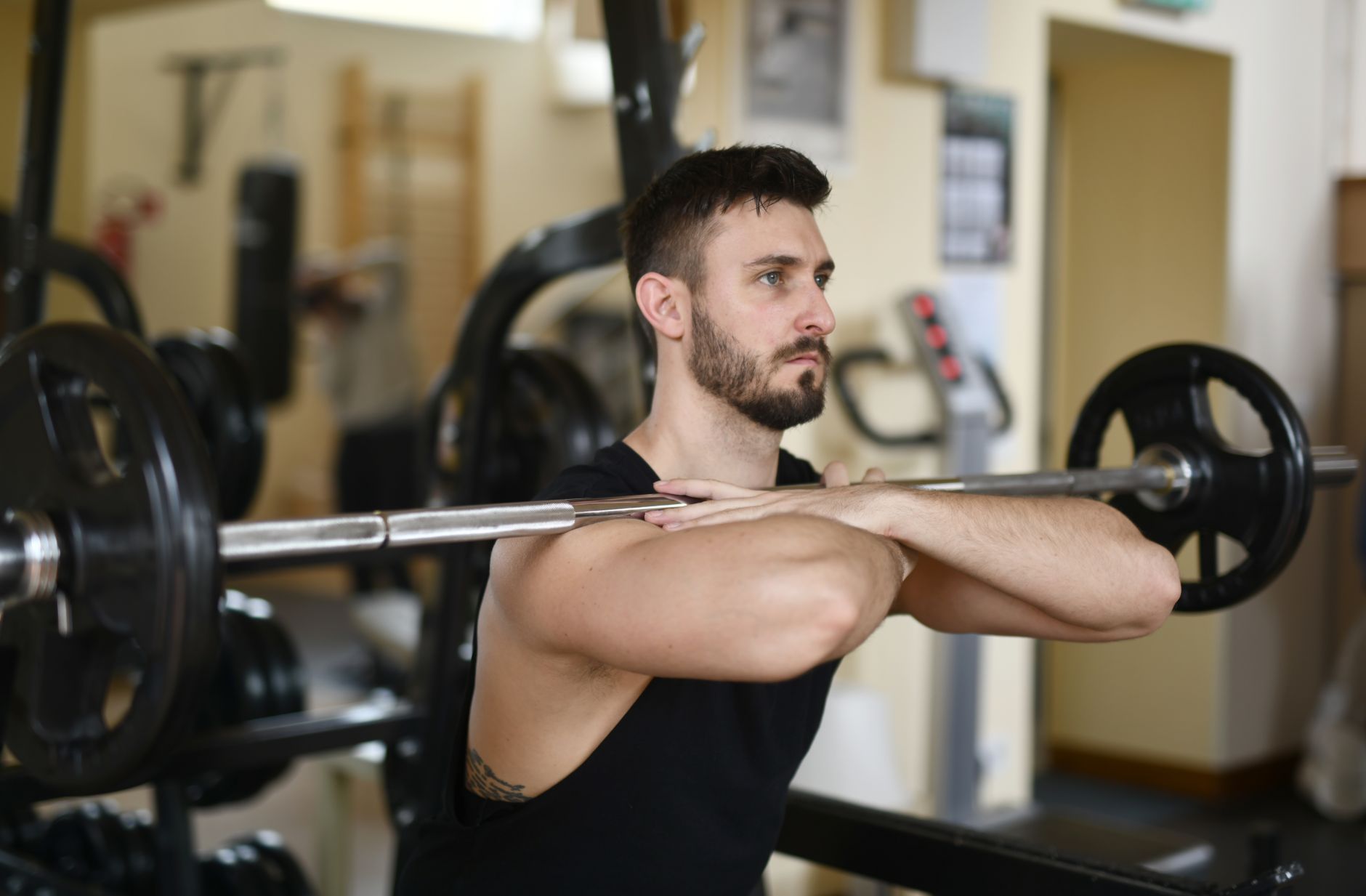
Most lifters treat the last rep of a set as the one to survive. Get through it, rack the weight, move on. That instinct makes sense - fatigue is real, and the final rep is genuinely harder. But ending a set with a paused rep, rather than a grind rep, changes what the set actually trains.
A pause rep means stopping at the most mechanically difficult position - the bottom of a squat, the chest-touch of a bench press, the knee-height position of a Romanian deadlift - and holding for two to three seconds before completing the lift. You lose the stretch reflex. You lose momentum. Whatever you have left has to come from actual muscular force and positional control.
Doing this at the end of a set, when fatigue has already accumulated, is different from doing pause reps fresh. The position degrades under fatigue in ways it won’t at the start of a set. Your hips shift, your lower back rounds slightly, your shoulder packs less. You feel it immediately when you pause because you can’t hide in movement anymore.
Why This Matters More Than Another Technique Cue
Pause reps at the end of a set function as a diagnostic. If your squat technique breaks down completely in the pause - if you have to bail out or you can’t maintain bracing - that’s information about where your actual strength ends and your momentum begins. A lot of people are stronger in motion than they are in position, and those two things should be closer together.
This also addresses a common problem in intermediate training: sets that feel hard but don’t produce much adaptation. When every rep uses a bit of bounce, a bit of timing, and muscle memory developed over years, the stimulus is lower than the effort suggests. The pause strips that out.
How to Add This Without Restructuring Everything
You don’t need to program pause reps throughout a whole set. Just the last one. Keep your normal working sets, normal weights, and on the final rep of your final set, pause in the bottom position for two to three seconds before completing it.
Expect the weight to feel dramatically heavier. Expect your position to tell you something uncomfortable. That’s the point.
For squat variations, bench press, and Romanian deadlifts, this works immediately. For overhead press, it depends - the bottom position isn’t always the sticking point, and a mid-range pause sometimes makes more sense.
The longer question is what you do with what you find out. If every end-of-set pause reveals the same positional collapse in the same movement, that’s not a fatigue problem.