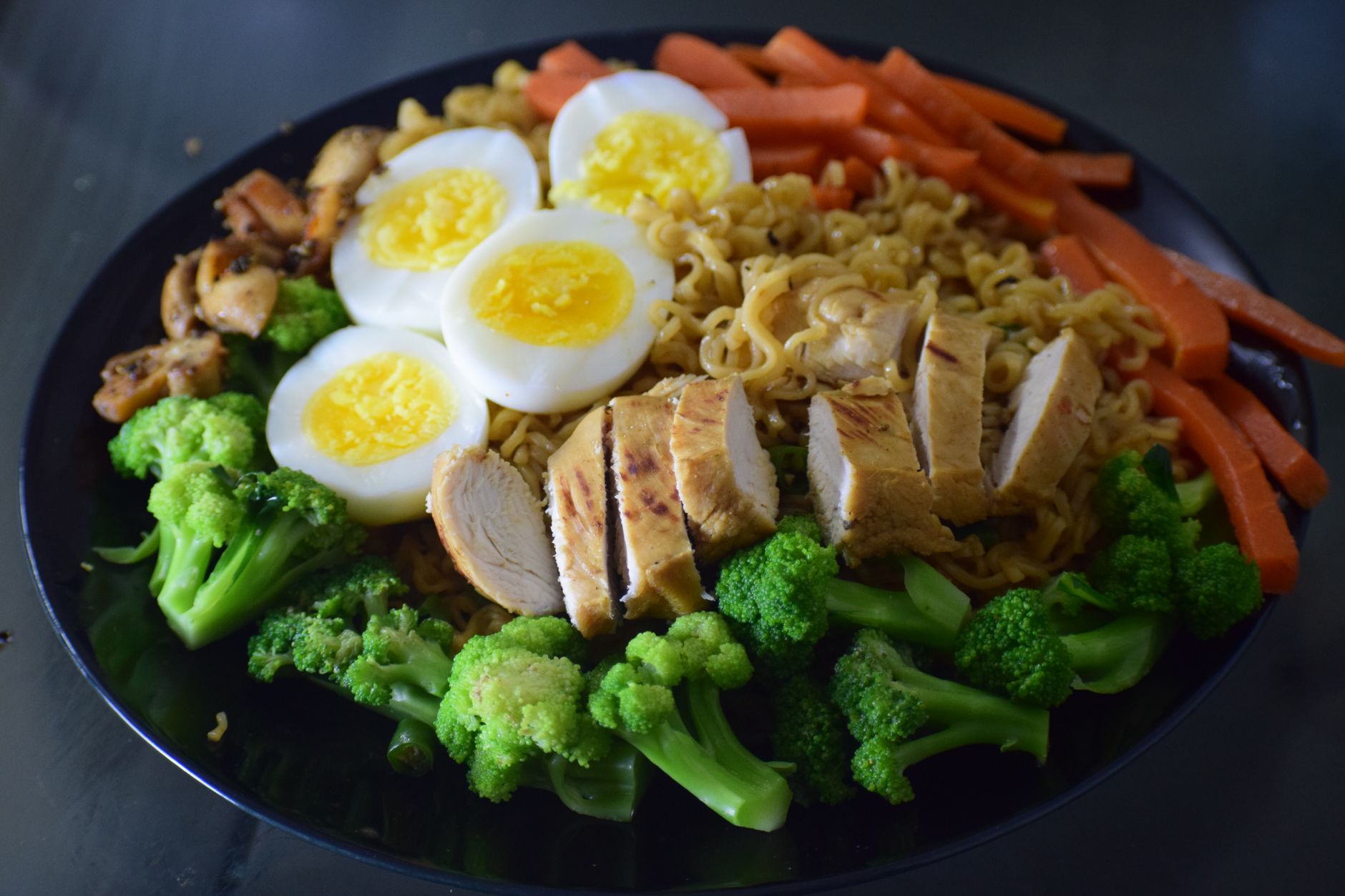
Most people think about protein the way they think about saving money - something they’ll get to after the other things are handled. They plan meals around what sounds good, what’s convenient, what’s in the fridge, and then check at the end of the day whether the protein worked out. It almost never does.
This is a sequencing problem, not a discipline problem.
When you plan food around carbohydrates and fats first - which most people do, because those foods are cheaper, more familiar, and take up more cultural space in cooking - protein gets squeezed into whatever calories remain. At 9pm, the gap between where you are and where you need to be is either too large to close or gets closed with something you didn’t want to eat. Neither outcome helps you.
Build the Plate Backwards
The fix isn’t complicated: decide on your protein source before anything else. Not as part of the meal - as the starting constraint. You’re having 150g of cooked chicken breast, or two whole eggs plus 200g of Greek yogurt, or a can of tuna. Everything else on the plate is built around that anchor.
This sounds rigid, but it’s the opposite in practice. Once the protein is fixed, the remaining calories are genuinely flexible. You can make the carbohydrate portion larger or smaller depending on training load, spend the fat budget on olive oil or cheese or nut butter, and the meal still works because the structural requirement is already met.
The people who eat consistently high protein without obsessing over it aren’t more disciplined - they just don’t give themselves the option of under-eating protein early in the day and hoping to compensate later.

The Breakfast Problem
Breakfast is where protein targets collapse earliest and most predictably. Toast, oats, fruit, cereal - almost everything the default breakfast culture offers lands between 4g and 8g of protein per serving. Starting the day 20–30g behind is a hole that compounds through lunch.
A breakfast that hits 30–40g of protein doesn’t require unusual ingredients. Three whole eggs with two slices of smoked salmon, or 250g of full-fat Greek yogurt with a scoop of protein powder mixed in, both get there without much effort. The issue isn’t access - it’s that most people don’t frame breakfast as a protein event at all.
One Number Worth Tracking
If you track nothing else, track your protein by midday. Not the daily total at 10pm - the halfway point at noon. If you’re under half your daily target by lunch, the rest of the day becomes a catch-up exercise that rarely ends well. That single mid-day checkpoint does more to change behaviour than any end-of-day audit.