
Most people treat breakfast as either a meal that matters a lot (green smoothie, overnight oats, the whole ritual) or one that barely counts - coffee, maybe a piece of fruit, nothing real until noon. Neither approach is wrong on its own. The problem is that both tend to leave protein almost entirely to the back half of the day, which makes hitting a meaningful daily target surprisingly hard.
If your goal is somewhere around 140–160g of protein daily - a reasonable target for someone training seriously at around 75–80kg - and you eat three meals, you need roughly 45–55g per sitting. That’s manageable. But if breakfast delivers 10g (a typical yoghurt or bowl of oats), you’re now asking lunch and dinner to carry 130g between them. Dinner in particular ends up doing absurd work: a 70g protein dinner is a very specific, deliberate meal. It doesn’t just happen.
Front-loading protein in the morning isn’t about some metabolic advantage from early intake. The evidence on protein timing across the day is genuinely mixed, and the anabolic window narrative has been walked back considerably in the literature over the last decade. The case for a high-protein breakfast is simpler than that: it turns a distribution problem into an arithmetic one. Hit 40–50g before 10am and you’re already a third of the way there with two full meals still ahead.
What 40g of Protein at Breakfast Actually Looks Like
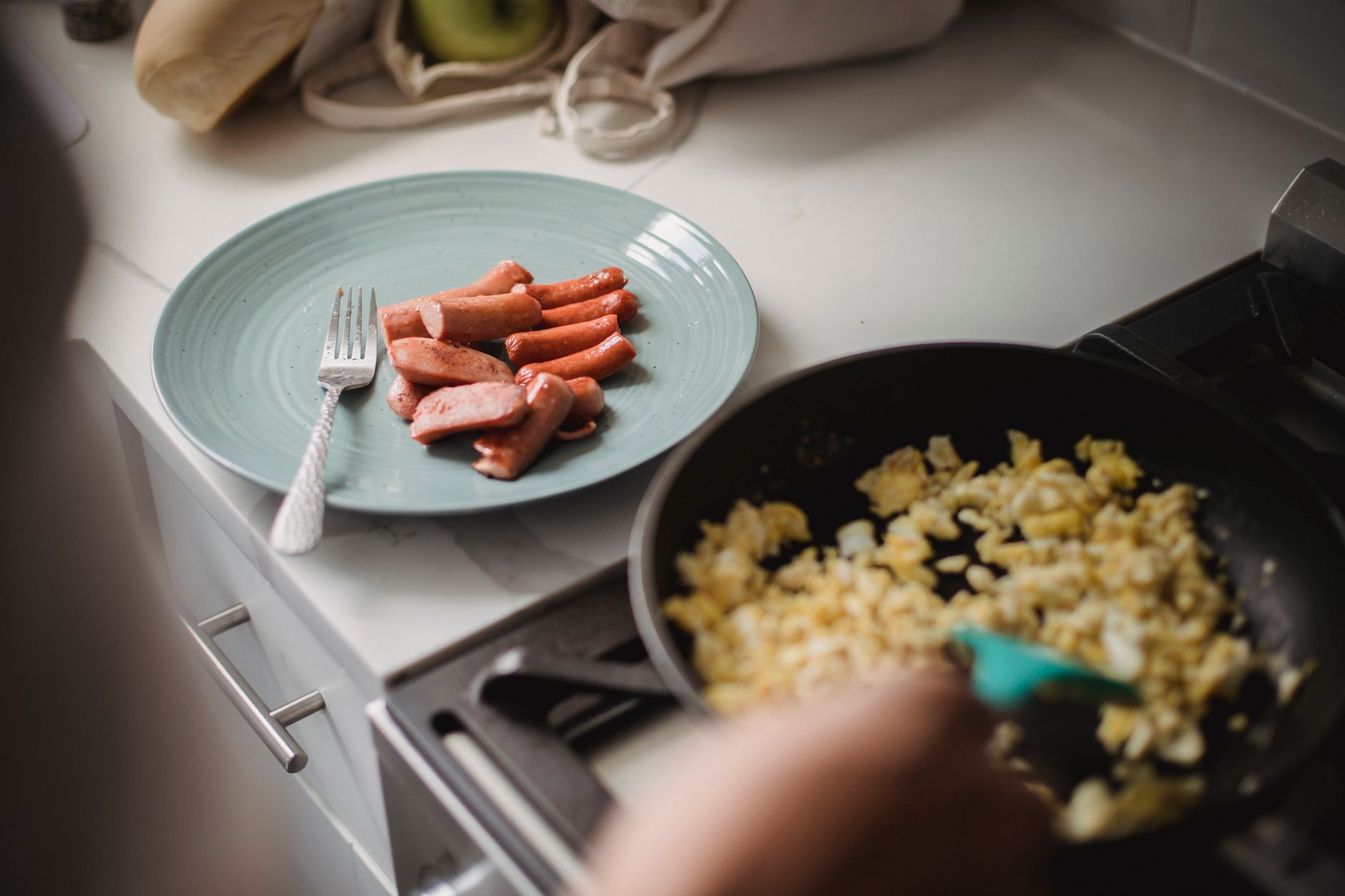
Three whole eggs plus 150g of Greek yoghurt gets you there. So does two eggs scrambled with 100g of smoked salmon. Cottage cheese on the side of anything adds 15–20g with minimal effort. None of this requires a novel approach to cooking - it mostly requires deciding in advance that breakfast is a protein meal rather than a carbohydrate one.
The carbohydrate-heavy breakfast isn’t the enemy here, but it tends to crowd out the protein by default. Oats are useful. A banana is fine. But if they’re the whole meal, you’ve spent the calories without moving the needle on the thing that’s hardest to accumulate.
The Practical Shift
One change worth making: audit what your breakfast actually delivers in protein grams, not just whether it feels healthy. Granola with almond milk looks like a solid meal and regularly comes in under 8g. That gap compounds.
Whether total daily protein matters more than its distribution is a real question - but distribution problems have a way of becoming total problems once life gets in the way of a perfectly planned dinner.