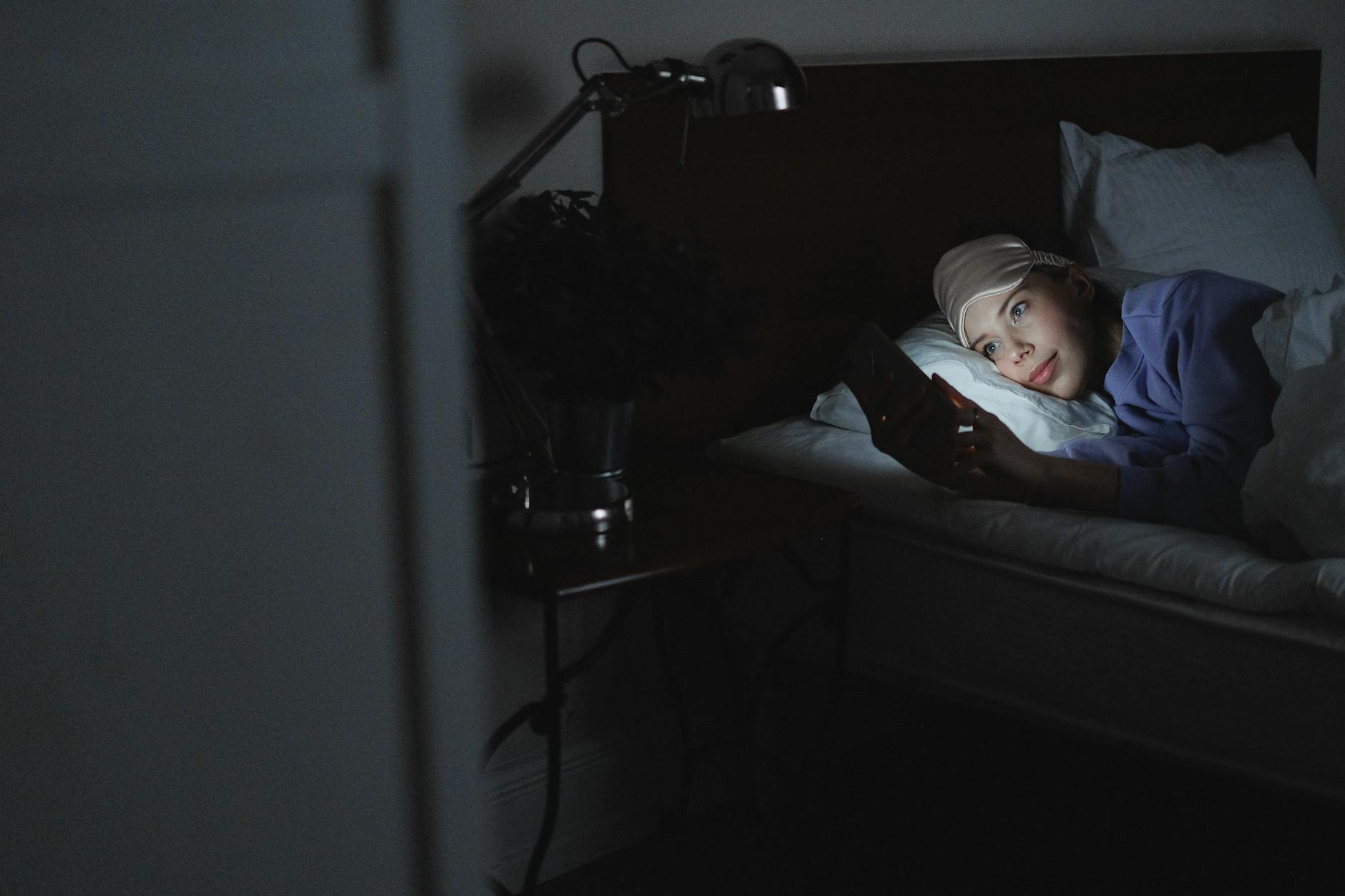
Most people treat late-night phone use as a sleep-delay problem - you stay up until 1am instead of 11pm, so you lose two hours. Fix the timing, fix the sleep. That framing misses the bigger issue.
Light from screens in the blue-wavelength range suppresses melatonin production. That’s well-established. But what gets less attention is what melatonin suppression actually does to sleep architecture - specifically to slow-wave sleep, which is the deep, restorative stage where the body does most of its physical repair and where the brain consolidates memory and clears metabolic waste via the glymphatic system.
When melatonin is blunted late into the evening, sleep onset shifts, but more importantly, the proportion of slow-wave sleep in the early part of the night shrinks. Since slow-wave sleep is front-loaded - you get most of it in the first half of the night - a delayed sleep onset means you’re cutting into exactly the stage you need most. You might sleep eight hours and still wake up feeling hollowed out, because the eight hours you got weren’t structured the same way eight hours starting earlier would have been.
The Mental Health Angle Gets Skipped Over
There’s a consistent association between fragmented or shallow sleep and elevated cortisol the following day. Cortisol isn’t inherently bad - morning cortisol is part of how you wake up and feel alert - but chronically elevated evening and next-day cortisol maps onto irritability, reduced stress tolerance, and worse emotional regulation. The research on sleep deprivation and emotional reactivity is fairly robust: sleep-deprived people show stronger amygdala responses to negative stimuli and weaker prefrontal regulation of those responses.
That’s not abstract. It shows up as snapping at people, catastrophising small problems, and feeling like your mental load is heavier than it should be - which most people attribute to stress rather than to what they were doing at 11:30pm.
What Actually Helps
Dim, warm lighting in the hour before bed does more than night mode on your phone. Night mode shifts colour temperature but doesn’t eliminate brightness, and brightness alone is a separate melatonin suppressor. Physically dimming lights in your environment is more effective.
The habit that seems to make the most difference, at least observationally, is replacing passive scroll time with something that doesn’t require a screen at all - reading a physical book, stretching, or just sitting in low light. Not because it’s relaxing in a vague wellness sense, but because it removes the stimulus that’s actively working against the sleep quality you’ll need the next day.
The phone isn’t just keeping you up. It’s making the sleep you get worse.