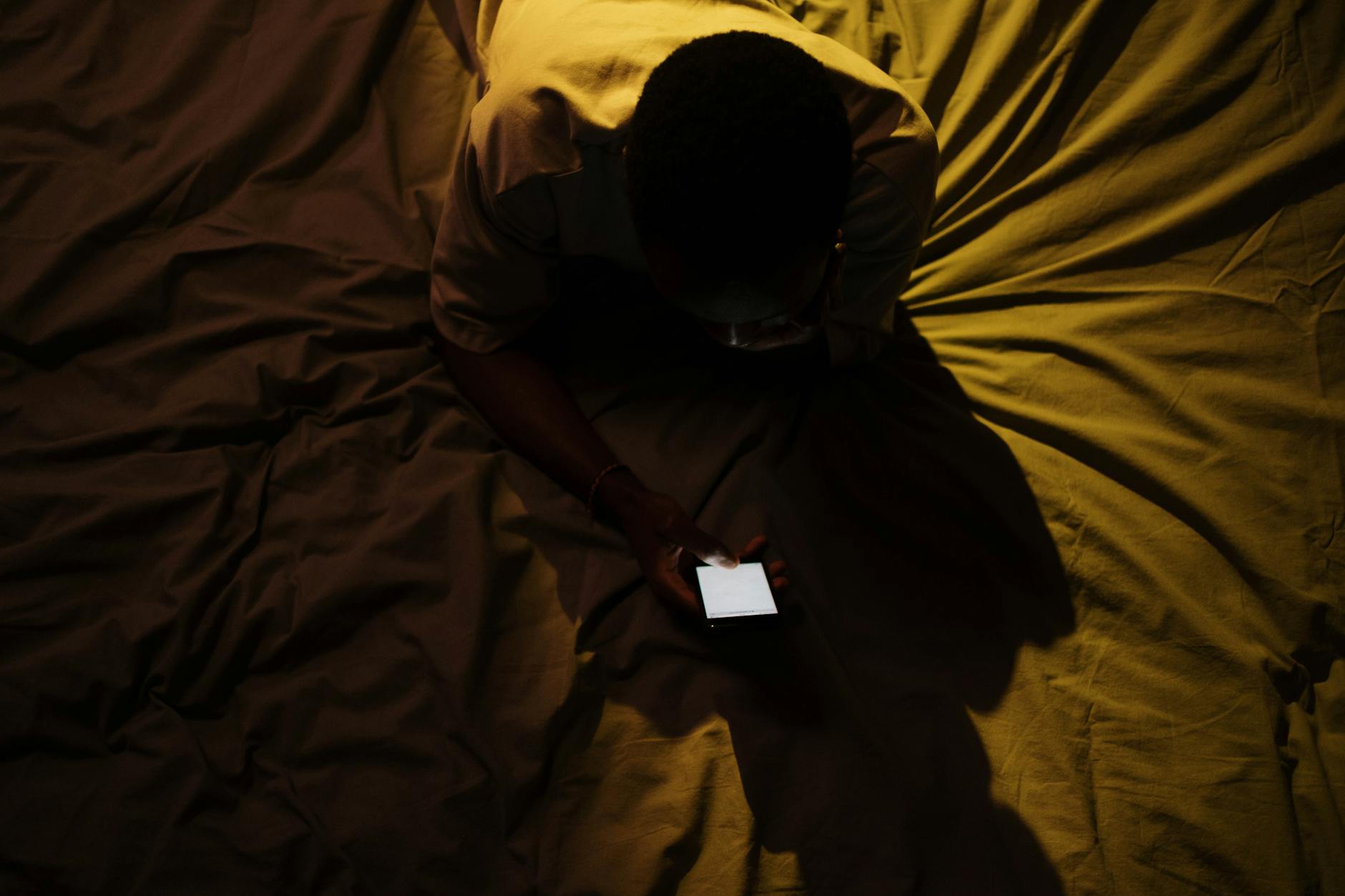
Most people understand the basic deal: screens before bed push back your sleep time. You lose an hour, feel groggy, and chalk it up to going to bed too late. That framing misses what’s actually happening.
The issue isn’t just timing - it’s architecture. Sleep isn’t a uniform block. It cycles through distinct stages, and the early part of the night is dominated by slow-wave sleep (SWS), the deep, physically restorative phase where tissue repair, immune function, and growth hormone release are concentrated. The second half tilts toward REM, which is more closely tied to emotional processing and memory consolidation.
When you delay sleep onset by 60 to 90 minutes - which is well within the range of a normal scrolling session - you don’t just shift everything forward. You compress the window for slow-wave sleep, because SWS is anchored to the early part of the night regardless of when you fall asleep. Your alarm goes off at the same time either way. That slow-wave debt doesn’t fully carry over to the next night.
Why the blue light argument is incomplete
Blue light from screens does suppress melatonin production, and that’s real. But the stimulation problem is separate from the light problem. Emotionally activating content - social media, news, anything with a comments section - elevates cortisol and keeps the nervous system in a state that’s incompatible with sleep onset, even in a dark room. Switching your phone to night mode doesn’t solve that part.
The more honest intervention is boring content or no content. Not dimmed content.

What this looks like physically
People who regularly shortchange slow-wave sleep tend to notice it as persistent muscle soreness that doesn’t resolve with rest days, appetite dysregulation (SWS is tied to ghrelin and leptin balance), and a kind of mental flatness that isn’t quite tiredness but isn’t sharpness either. These symptoms get attributed to training load, diet, stress - almost everything except sleep quality specifically.
One concrete change worth making
Put the phone in another room 45 minutes before bed. Not face-down on the nightstand. Another room. The barrier needs to be physical because the habit is automatic - most people reach for their phone before they’ve made any conscious decision to do so.
That single change, done consistently, tends to shift sleep quality more noticeably than any supplement or sleep-tracking device.