
Most reps have a beginning and an end. You lower the weight, you lift the weight, you move on. The middle - the point of maximum mechanical tension, where the muscle is both lengthened and loaded - gets a fraction of a second of attention before momentum carries you through.
Isometric holds change that. By pausing at a specific joint angle for a deliberate count, you remove the escape route. The muscle has to sustain force output with nowhere to go.
What an Isometric Hold Actually Is
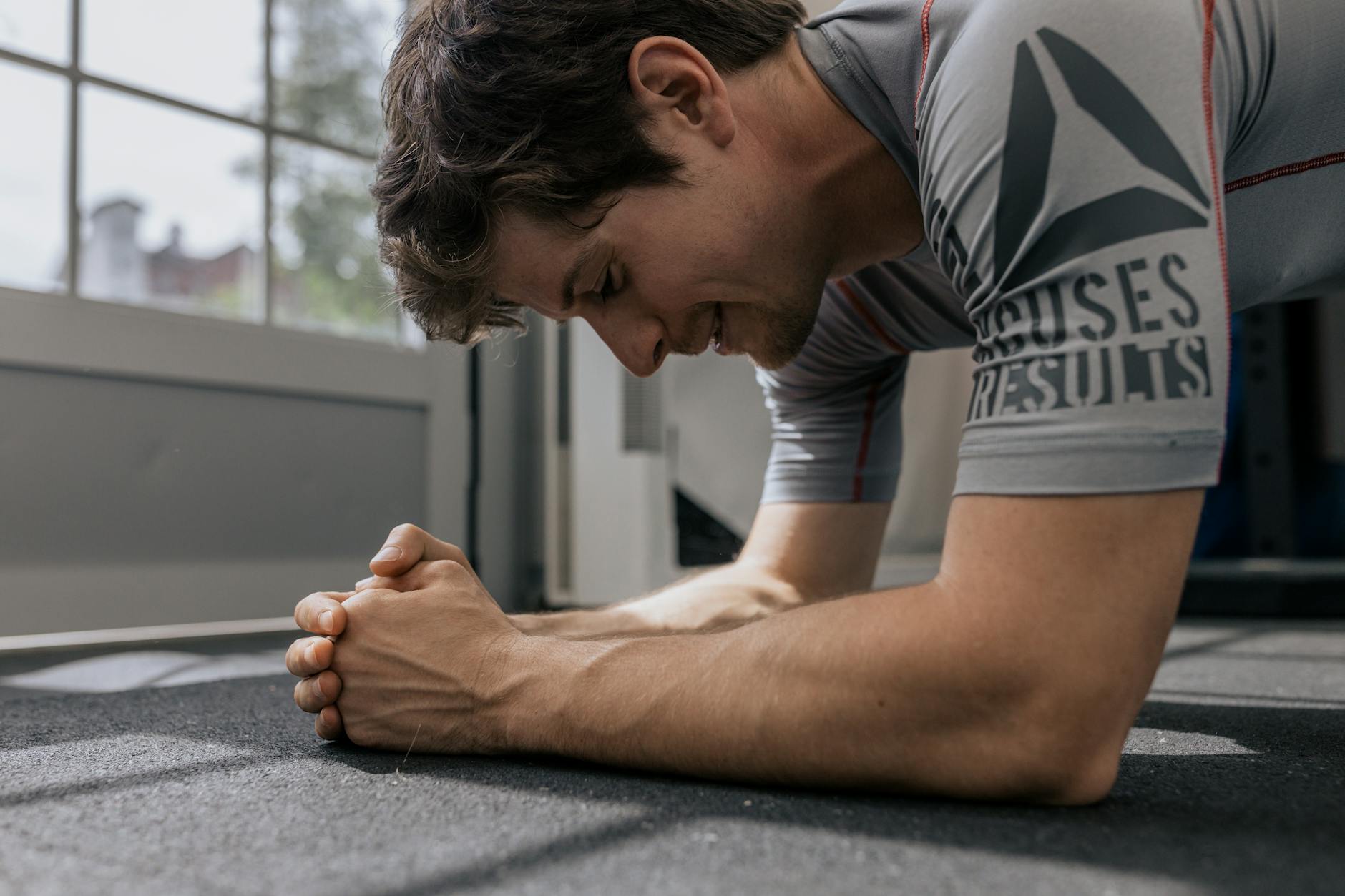
An isometric contraction is one where the muscle generates tension without changing length - joint angle stays fixed. This happens naturally at the bottom of a squat if you pause before reversing, at the top of a Romanian deadlift before you pull back up, or mid-curl when you hold the weight at 90 degrees.
The hold doesn’t have to be long. Two to three seconds is enough to break momentum and force the muscle to actually work at that position. Five seconds starts to feel like a different exercise entirely.
Where to Add Them
The most productive position for a hold depends on the movement. For compound lower-body lifts - squats, split squats, leg press - the bottom position is where the glutes and quads are under the most stretch-loaded tension. That’s where the hold goes.
For pulling movements like rows or lat pulldowns, the contracted position (bar to chest, elbows driven back) is typically more productive. Holding there builds the kind of scapular control that carries over to posture and shoulder health in ways that standard reps often miss.
Hinges are slightly different. On an RDL, a mid-range pause - when the hips are at roughly 45 degrees - places the hamstrings under significant load without the instability of the fully lengthened bottom position. That’s where most people feel it most.
The Practical Trade-Off
You will use less weight. That’s not a problem - it’s the mechanism. A set of eight split squats with a three-second pause at the bottom requires meaningfully less load than a set of eight done at normal tempo, but the time under tension and the demand on stabilising musculature are both higher.
Isometric holds fit best in the second or third exercise of a session, after heavier compound work when form is still clean but the nervous system is already primed. Dropping them into the first movement of a workout tends to produce compensations as the body looks for an exit from an unfamiliar position.
They’re also useful as a diagnostic tool. If you can’t hold the bottom of a Bulgarian split squat for two seconds without your torso collapsing, that’s useful information about where your weakness actually lives - independent of how much weight is on the bar.