
Most lifters treat isometric holds as a warm-up afterthought or a rehab tool for injured people. That’s a mistake. Holding a position under load is its own training stimulus - distinct from concentric or eccentric work - and it builds strength at specific joint angles in a way that moving through a range of motion simply doesn’t replicate.
The reason this matters: if you’re weak at one point in a movement, a standard rep lets you rush past it. Momentum, compensatory muscles, and habit carry you through. An isometric hold camps out exactly there. Pause at the bottom of a squat for four seconds and you’ll find out immediately whether your hips are doing the work or your lower back is taking over. The hold doesn’t lie.
Where to Actually Use Them
The most effective placement for isometric holds depends on what you’re training for. Mid-range holds - like pausing a Romanian deadlift at shin level - build general time-under-tension and reinforce body position. End-range holds, like a dead-hang from a pull-up bar or a fully extended overhead press lockout, develop joint stability where most injuries happen. These are different goals, and treating them as interchangeable is where people dilute the method.
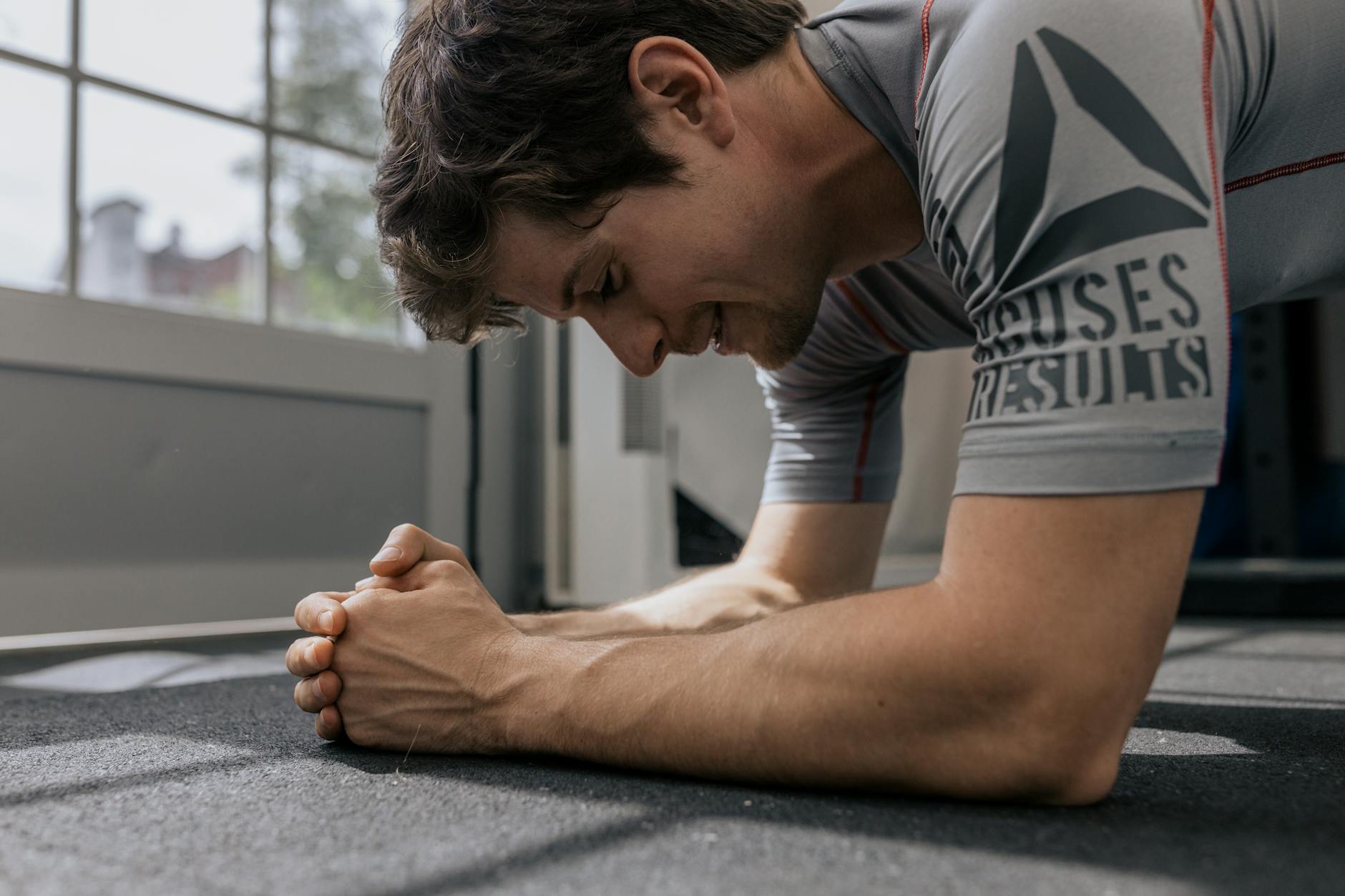
For practical programming: pick one movement per session and add a 3–5 second hold at the sticking point. Not every rep, not every set - two to three sets of four to six reps with the hold is enough to feel it the next day without turning the session into something it isn’t.
The Part Nobody Mentions
Isometric training produces strength gains that are somewhat angle-specific - meaning you get strong in the range where you train, with limited carryover beyond roughly 15–20 degrees from that position. This is well-documented in exercise science literature. Which means holds won’t replace full range-of-motion work. They fill gaps in it.
People who add holds to a sticking point for four to six weeks and then return to standard reps often report the movement feeling different - more controlled, less rushed through the hard part. Whether that’s purely structural strength or partly proprioceptive awareness is an open question, and probably both.
Either way, if a movement has a point where you quietly hope you make it through - that’s exactly where the hold goes.