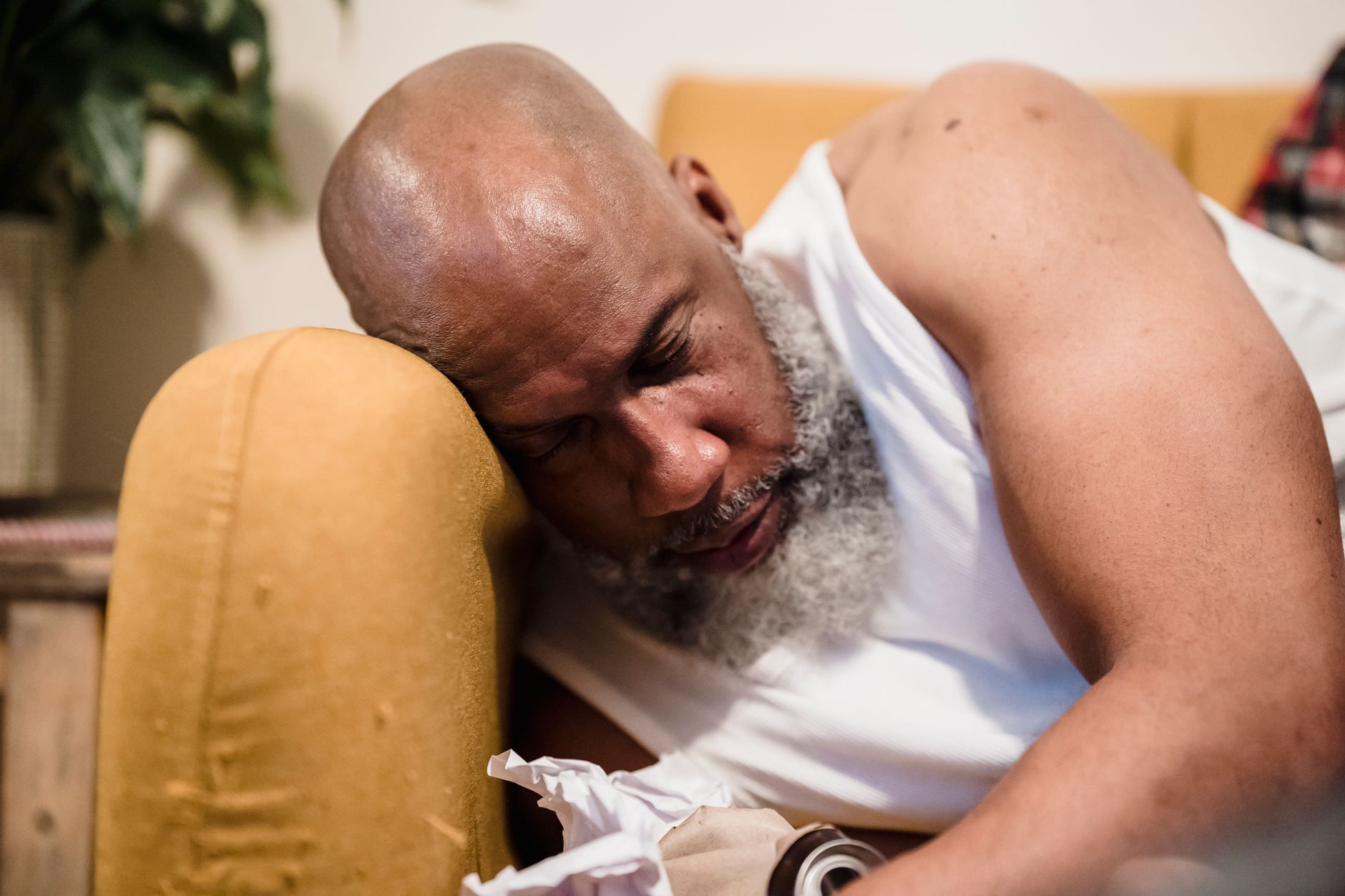
Most people blame poor recovery on obvious things - not enough sleep, skipped meals, training too hard. Those matter. But there’s a category of stress that rarely gets named directly: the kind that never peaks, never resolves, and never fully turns off.
Work notifications that arrive at 9 p.m. A low-level financial worry that you’ve learned to ignore. A relationship that’s fine, technically, but costs you something. None of these feel dramatic enough to count as “stress” in the way people usually mean it. But your nervous system doesn’t distinguish between the kind of stress worth worrying about and the kind you’ve just habituated to.
What’s Actually Getting Disrupted
The hypothalamic-pituitary-adrenal (HPA) axis governs the body’s stress response, including cortisol release. Cortisol isn’t inherently a problem - it follows a natural diurnal rhythm, peaking in the morning and declining through the evening. That decline is part of what allows the body to shift toward recovery and sleep.
Chronic low-grade stress - the ambient, never-resolved kind - tends to flatten that curve. Evening cortisol stays elevated. Sleep architecture shifts: you get less slow-wave sleep, which is where most physical repair happens. You might sleep eight hours and wake up feeling like you slept five.
This is also why heart rate variability (HRV) tends to drop during sustained stressful periods even when training load stays constant. The body is treating non-training stress as a load.

The Part People Keep Missing
You cannot out-sleep a nervous system that won’t downregulate. Magnesium supplements, blackout curtains, and a consistent bedtime all help - but they address the environment, not the signal. The signal is still running.
This is where the intervention isn’t about adding recovery tools but about reducing inputs. Not in a vague “stress less” way, but specifically: identifying what’s keeping the background activation high and either resolving it, containing it to defined windows, or accepting it consciously instead of carrying it as ambient dread.
The last one sounds passive. It isn’t. Acknowledged stress has a different physiological profile than suppressed or ignored stress. Rumination - replaying a situation without resolution - maintains cortisol elevation in a way that naming the stressor and setting it down does not.

The Practical Part
One habit that has reasonable support in the research: a brief end-of-day “cognitive offloading” practice - writing down open tasks and worries before the evening begins. The mechanism is simple: the brain tends to rehearse unfinished items to avoid forgetting them. Externalising them to a list appears to reduce that rehearsal loop, which allows arousal levels to drop faster heading into the evening.
It’s not a fix. But it targets the actual problem rather than layering more recovery protocols on top of a system that’s still receiving stress inputs.
If your recovery metrics are consistently poor and your sleep environment is already dialled in, the answer probably isn’t another supplement. It’s worth looking at what your nervous system is still processing after you’ve technically stopped working.