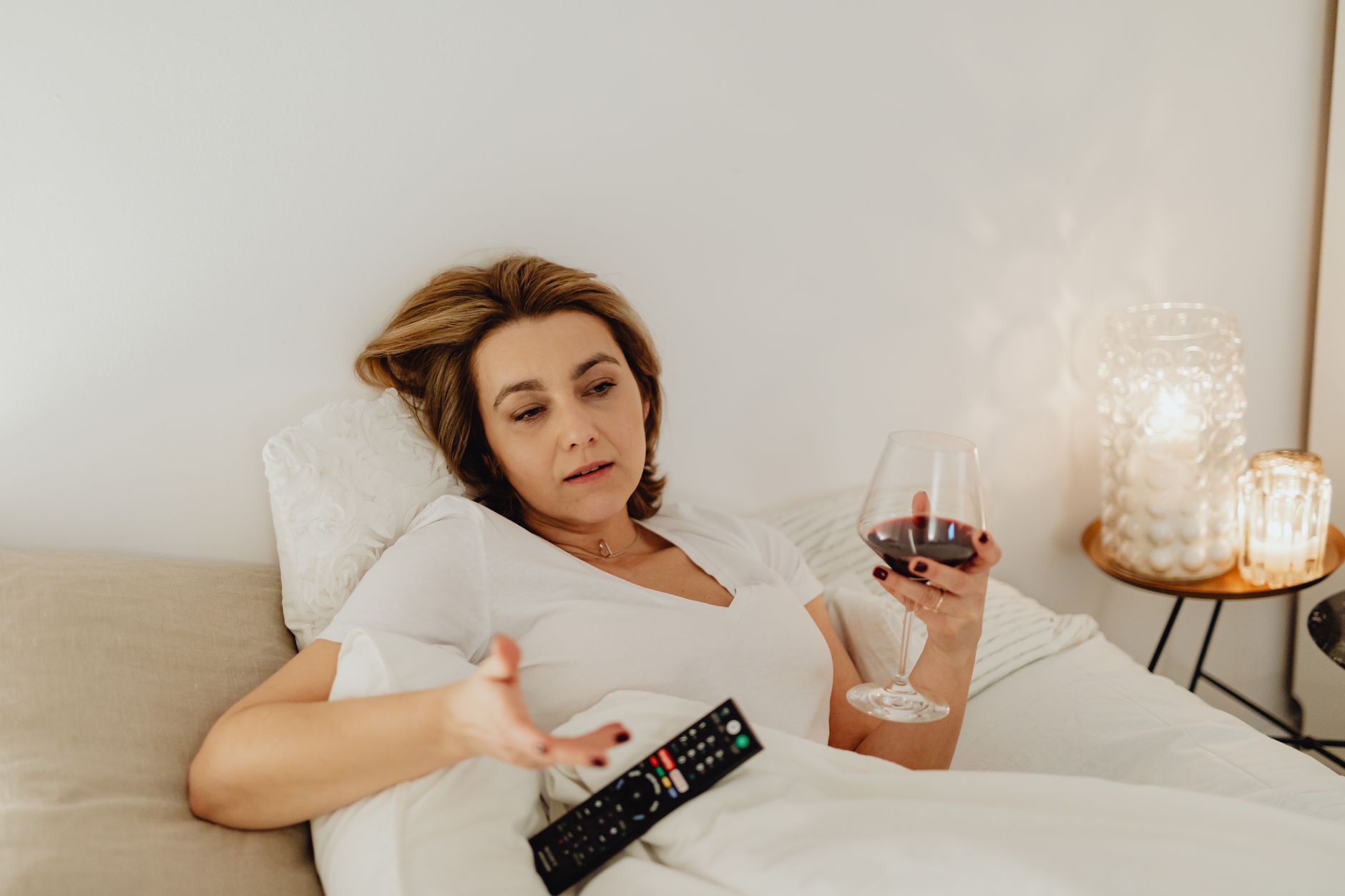
A glass or two of wine in the evening really does make it easier to drop off. That’s the part that fools people. Sedation shortens the time it takes to fall asleep, so the drink seems to have worked, and the evidence for that conclusion is a feeling you had at 11 p.m.
The bill arrives later.
What happens after the first few hours
As your body processes alcohol, sleep tends to get lighter and more broken. Alcohol is well documented to suppress REM sleep, especially early in the night, and the second half often brings more waking and more fragmented sleep. It also increases urine production, so a bathroom trip at 3 a.m. is not a coincidence. You can be in bed for eight hours and still wake up feeling like you got six.
This matters more if you train. The session you do the next day is built on the sleep you got, not the sleep you intended to get. Lifting feels heavier, patience runs shorter, and appetite is harder to manage. None of that requires a hangover, which is the detail people use to excuse two drinks. No headache doesn’t mean no effect.
Check it yourself
If you wear a tracker, compare a few nights with alcohol against a few without. The pattern commonly reported is a higher overnight resting heart rate and lower heart rate variability after drinking. These devices aren’t perfect sleep scientists, but a consistent gap between your own drinking nights and non-drinking nights is hard to wave away. I find it more convincing than any general statistic, because it’s your data.

Timing
My view is that when you drink matters as much as how much. A drink with dinner at 7 p.m. and a drink at 10:30 p.m. are not the same thing for your sleep, because the second one is still being cleared when you’re trying to rest. If you’re going to keep the habit, move it earlier.
The swap that works
The nightcap is usually about winding down, not about alcohol. A hot shower, a book, or tea does the same job without borrowing against the second half of the night.